Every joint in our body is perfectly designed to function in one of two ways; either to provide stability and strength or mobility and movement. Take a look at the picture below which highlights how each joint operates in an alternating fashion to provide balance to our structure:
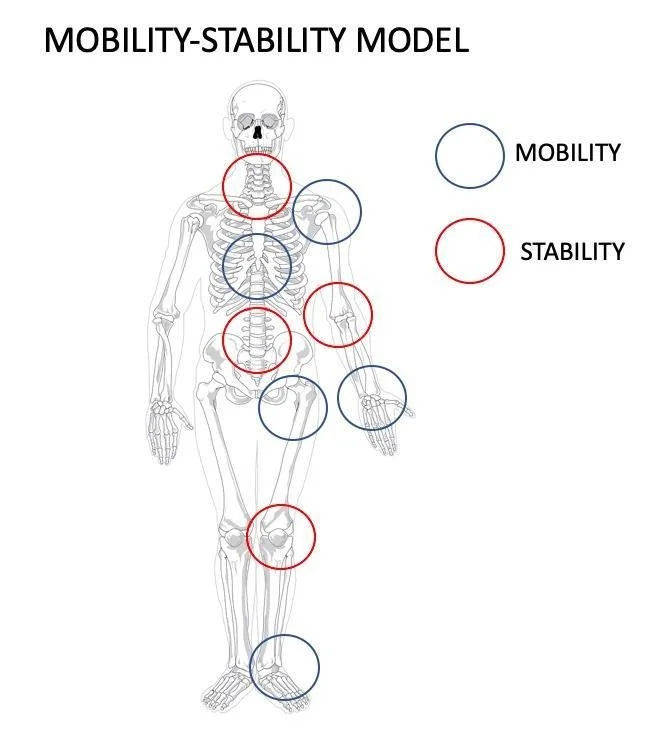
This functional model summarizes how our bodies are able to optimize movements and prevent injuries. When someone states that their knee has been bothering them, my first thought as a practitioner is, are there any injuries present that would affect the knee’s ability to be stable, such as a tear or sprain/strain? If the answer is no, the issue is likely coming from a lack of mobility or movement within the surrounding joints; the ankle and hip.
There is a common misconception that if you are flexible, you shouldn’t have pain. The term for being overly flexible is called “hypermobility” and individuals with generalized hypermobility may have a ton of mobility with no joint restriction however they are lacking on the opposite side of the equation- stability. We often see gymnasts who typically have very good mobility, usually hypermobility, constantly working on stretching. In fact, they are making their joints less stable as they induce a stretch beyond normal capacity. While trigger points and the sensation of being tight are still normal in those with increased mobility, foam rolling is a much better technique than stretching.
Whether your issue is needing to work on building strength or working on increasing mobility, dysfunctional movement patterns and pain are the end result of both. If you are dealing with pain or dysfunction in a specific region of your body, consider whether it is designed to be stable or mobile and then work the joint accordingly. For specific questions, reach out to OPC to improve your performance and optimize your health!